
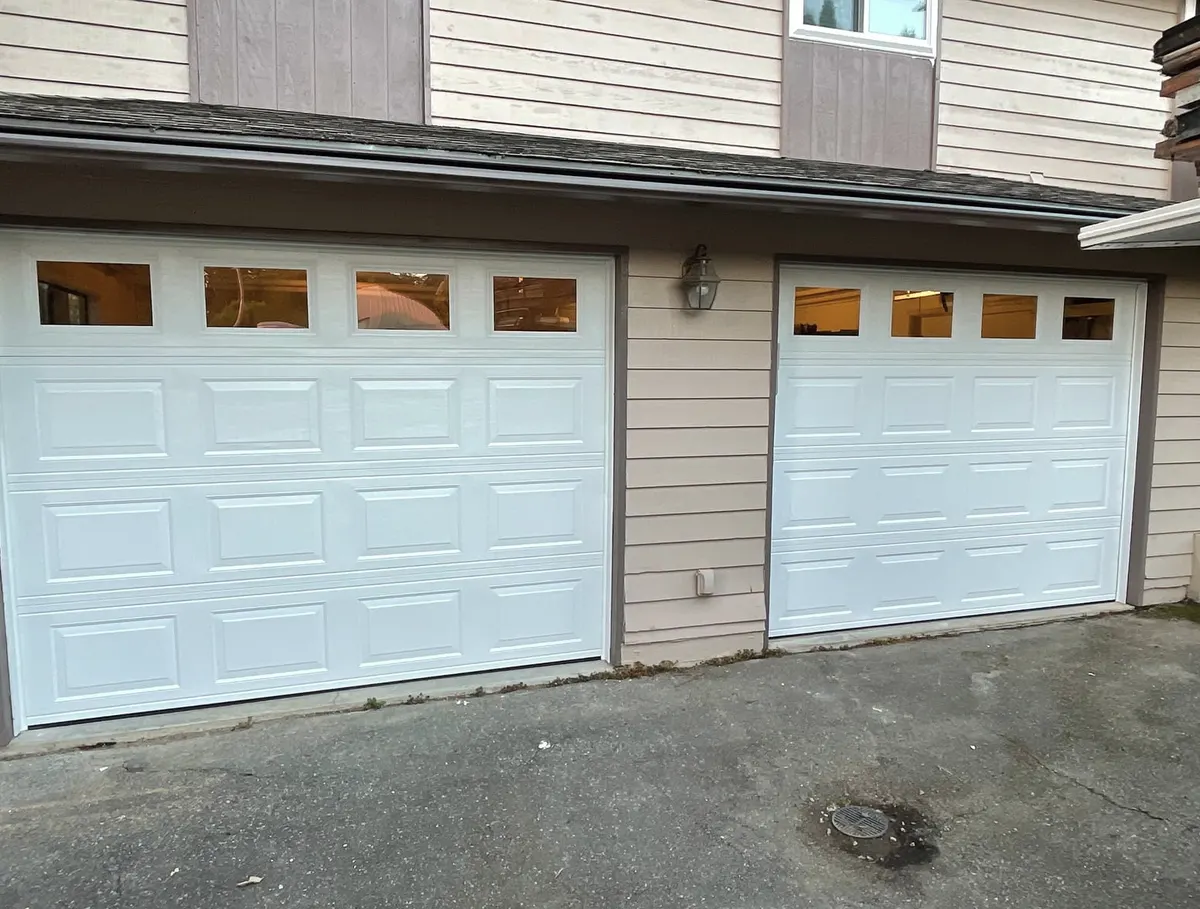
What a Technician Sees on This Kind of Call
It usually starts the same way. A technician pulls up to measure for a new garage door, and one spouse says "just match the old one, we don't need to tell anyone," while the other is holding a printed copy of the HOA handbook and insisting they'll get a violation notice. Both are half right, and the confusion is understandable, because the rules that govern a garage door replacement actually come from three separate places: your homeowners association (if you have one), your local building department, and the building code that applies to your jurisdiction. They don't always overlap, and none of them automatically apply to every house.
HOA Rules: Style and Appearance, Not Structure
If your subdivision has an HOA or a deed-restricted architectural committee, it almost certainly has something to say about garage doors, because they're one of the largest visible surfaces on the front of a house. Typical HOA restrictions cover things like:
- Approved colors (often limited to match the house trim or a set palette)
- Panel style or window inserts (carriage-house look required in some developments, plain panel required in others)
- Material (some associations prohibit vinyl or require real wood or wood-look steel)
- Whether you need written approval before installation even starts
None of this is about safety or structure. An HOA can't override your local building code, and it has no authority over whether your opener is rated correctly or whether your door can handle a summer storm. What it can do is fine you or require you to redo the work if you installed a door that doesn't match the approved look. If your community has an HOA, the fastest way to settle the argument is to pull the actual governing documents or call the management company, not rely on what a neighbor did five years ago.
Permits: A Local Building Department Question
Whether a permit is required depends entirely on your municipality and what exactly is being done. In general, straightforward swaps — same size opening, same track configuration, no changes to the header or framing — are treated differently than jobs that involve widening the opening, changing from a single door to a double, or rebuilding a deteriorated frame. The only way to know for certain is to call your local building department and ask, because requirements vary and this guide isn't a substitute for that call. What's worth knowing going in is why it matters: a permit triggers an inspection, and an inspection confirms the door and its anchoring were installed to current code, which protects you if you ever sell the house and a buyer's inspector asks about it.
Wind-Load Ratings: Why They Exist Here
This is the part that gets skipped most often, and it's the one with real safety weight behind it. Garage doors are rated for wind load, meaning how much pressure they can withstand before the panels buckle or the door blows in or out of its tracks. Building codes in many areas reference a minimum wind-load rating for garage doors, tied to the kind of storm activity typical for that region. Given the humid summers and storm systems that roll through this part of Michigan, along with the heavy, wet snow loads and ice that build up against doors in winter, a door and its hardware need to be matched to more than just the opening size.
A few practical points that matter more than the debate over paperwork:
- Wind-load rating is a function of the door's steel gauge, the track system, and the number and spacing of struts on the back of the panels — not just the brand name on the box.
- A door that looks identical to your old one from the driveway can have a completely different wind rating depending on reinforcement.
- If your opening was ever widened or the header modified, the bracing requirements change, which is part of why some jurisdictions tie a permit requirement to that specific kind of job.
- Installers who skip checking wind rating aren't necessarily doing anything illegal, but they may be leaving you with a door that underperforms in exactly the kind of weather this area gets.
How to Actually Settle the Argument
- Pull your HOA's architectural guidelines (or call the management company) and confirm color, style, and approval process before you order anything.
- Call your local building department and ask directly whether your specific project — same-size replacement vs. opening changes — requires a permit.
- Ask your installer for the wind-load rating of the door they're quoting, not just the brand and price.
Whoever does that legwork wins the argument, because it's not a matter of opinion once you have the actual answers in hand.
When to Call Livonia Garage Door
If you're at the stage of comparing doors and want someone who already knows what reinforcement and rating make sense for this climate, that's exactly where our Garage Door Installation team earns its keep — we'll talk through panel construction and bracing options before you commit to a look that an HOA might reject anyway. And if your current door is already showing stress from age, winter freeze-thaw cycles, or storm pressure — sagging panels, struts pulling away, a frame that's racked — our Garage Door Repair service can assess whether repair buys you time or whether replacement is the smarter move before another Michigan winter sets in.
Call Livonia Garage Door today to get a straight answer on your door, your opening, and what actually needs to happen before replacement day — serving Livonia and the surrounding Michigan communities.