
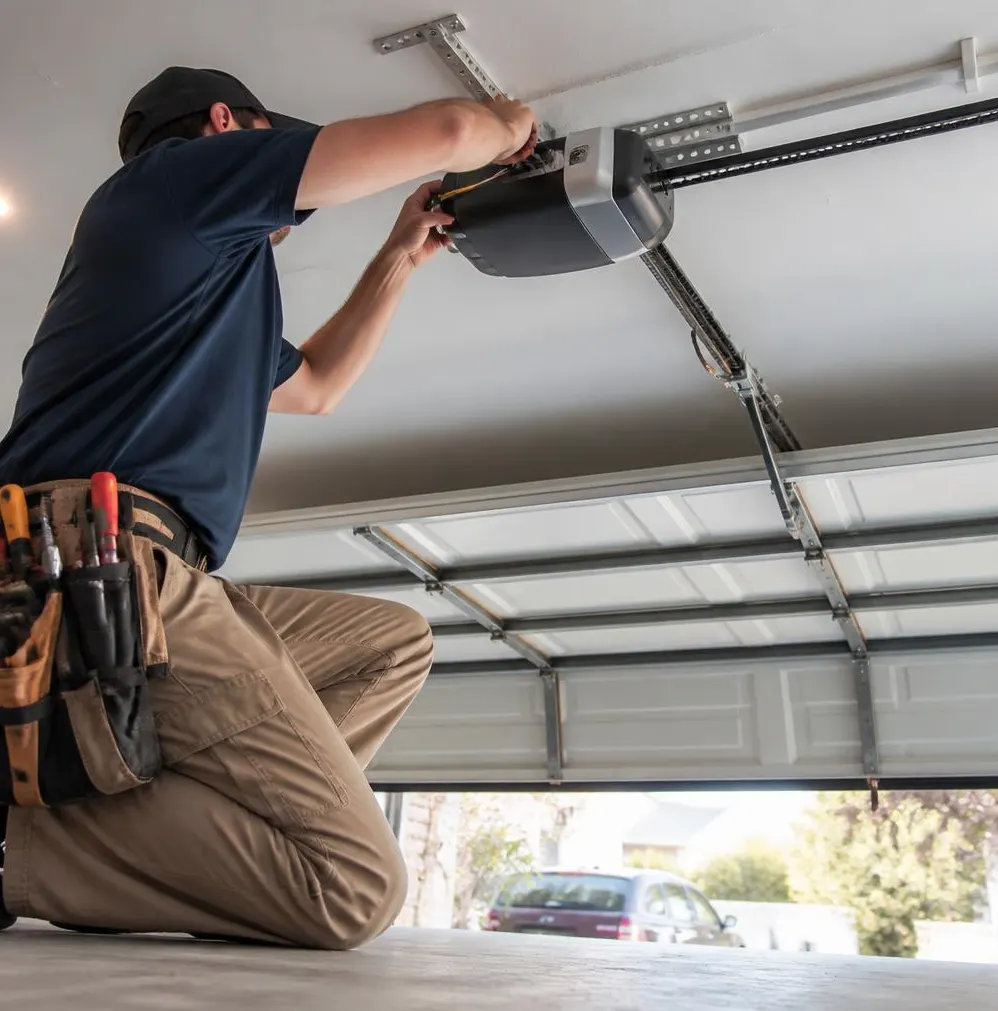
What a Technician Sees on a Typical Fall Call in This Area
By late October and into November, service calls around Livonia start to follow a pattern. A homeowner hits the opener button and the door groans, stalls halfway, or doesn't move at all. Often the culprit is simple: the weatherstripping along the bottom has gone stiff and cracked over the summer, the door is sitting slightly out of balance, or the grease on the springs and rollers has thickened in the first real cold snap. None of these are dramatic failures, but they're exactly the kind of small issues that turn into a stuck door or a broken spring once temperatures drop and stay down for weeks at a time.
Michigan winters don't ease in gently. Hard freezes, heavy snow, ice buildup, and the road salt tracked in on tires and boots all put extra strain on a garage door system that worked fine all summer. A little attention now, before the first deep cold arrives, prevents most of the calls we get in January.
Inspect and Replace Weatherstripping
The rubber seal along the bottom of the door and the vinyl strips along the sides are the first line of defense against snow, slush, and cold air. By fall, UV exposure and summer heat often leave this material cracked, flattened, or pulling away from the track.
- Run your hand along the bottom seal — if it's stiff, torn, or doesn't sit flush with the floor, replace it before the first snow.
- Check the side and top seals for gaps where daylight shows through.
- If your garage has a utility sink, water heater, or pipes near the door, a bad seal isn't just a comfort issue — it can mean cold air reaching lines that shouldn't freeze.
Give Springs and Hardware Attention Before It Gets Cold
Torsion and extension springs lose some flexibility in cold weather, and steel contracts slightly as temperatures drop. A spring that's already near the end of its life is far more likely to snap during a hard freeze than in mild weather. Fall is the right time to look at:
- Spring condition — gaps between coils, visible rust, or a door that feels heavier than usual when opened manually are warning signs.
- Rollers and hinges — lubricate with a garage-door-specific lubricant, not household oil, which can gum up in the cold.
- Nuts and bolts — temperature swings loosen hardware over a season; a quick tightening pass now prevents rattling and misalignment later.
If a spring looks questionable, replacing it in October beats discovering it's broken when you're trying to get the car out during a snowstorm.
Check the Opener and Battery Backup
Cold weather is tough on garage door openers. Chain and belt drives can run slower in low temperatures, and battery backup systems — if you have one — lose capacity in the cold, which matters during winter power outages. Test the opener's force settings: a door that reverses unexpectedly or struggles to fully close may need adjustment before snow and ice add extra resistance. If your opener has a battery backup, this is a good time to check it still holds a charge.
Protect Against Salt, Slush, and Ice
Vehicles dripping road salt and slush onto the garage floor through the winter months accelerate corrosion on tracks, springs, and the bottom of the door panel itself. A few habits help:
- Wipe down the bottom panel and tracks periodically through winter to remove salt residue.
- Keep the track clear of ice buildup, which can throw off the door's alignment or cause it to bind.
- Watch for ice forming where the door meets the floor — it can glue the door shut or create an uneven seal.
Think About the Garage Itself
If your garage is attached and you use it as a workspace or for anything that shouldn't freeze, check for insulation gaps around the door frame and consider an insulated door panel if yours is older and uninsulated. It won't make the garage warm, but it reduces how much cold transfers into an attached living space and cuts down on condensation that can lead to rust on hardware.
When to Call Livonia Garage Door
If you're hearing grinding, seeing visible spring damage, or the door is noticeably off-balance, it's worth having it looked at before winter rather than during an emergency. Livonia Garage Door handles spring replacement and garage door maintenance visits that check balance, hardware, and seals in one trip — the kind of tune-up that catches small problems while they're still cheap and easy to fix. If a door does fail during a cold snap, our emergency garage door service is built for exactly that situation.
Don't wait for the first hard freeze to find out your door isn't ready. Call Livonia Garage Door today to schedule a winter check for your home in Livonia, MI.